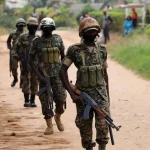
The government of Nigeria has issued sharp rejections following a major diplomatic development from the United States. President Donald Trump announced plans for potential military action in Nigeria.
This threat coincided with his decision to redesignate the country as a “Country of Particular Concern” regarding religious freedom.
President Trump declared publicly that “Christianity is facing an existential threat in Nigeria.” He subsequently ordered the Pentagon to begin planning military options. He warned that the U.S. would “immediately stop all aid and assistance” if the situation persists.
Nigeria Rejects Characterization
In response, Nigerian President Bola Tinubu asserted that this characterization “does not reflect the national reality.” He emphasized that religious freedom and tolerance constitute a core tenet of the nation’s collective identity.
The Nigerian government has consistently denied any knowledge of systematic religious persecution targeting any group.
This is the second time the U.S. has applied the severe designation to Nigeria. The country was first placed on the list in 2020. However, the label was later removed in 2023.
Complex Security Situation
Nigeria’s ongoing security crisis is highly complex and multifaceted. It involves violence from extremist groups, ongoing farmer-herder conflicts, and localized secessionist movements.
While attacks targeting Christians have received substantial international attention, security analysts observe that Muslims frequently constitute the majority of victims in the Muslim-majority northern regions.
Given that Nigeria’s population of over 220 million is nearly evenly split between Christianity and Islam, simple narratives of unilateral religious persecution are complicated by the violence affecting all faiths.
Divided Reactions and Calls for Collaboration
The latest U.S. move has sparked widespread debate within Nigeria. Some citizens view the action as unwarranted foreign interference in a sovereign state. Conversely, others see potential benefits in international assistance.
“If it will end in security, we welcome it,” said broadcaster Cyril Abaku. His pragmatic view reflects a desire for solutions.
“We shouldn’t see it as ‘we’ versus ‘them’. It should be, if you want to come in, we welcome it and let’s collaborate.”
This division highlights the desperate search for effective solutions amid widespread violence. Many communities across the country feel increasingly unsafe.
READ ALSO: Powerful Quake Strikes Northern Afghanistan, Leaving 20 Dead





 Armenian Dram
 Ghana Cedi
 Gambian Dalasi
 Guinea Franc
 Nigerian Naira
 CFA Franc BEAC