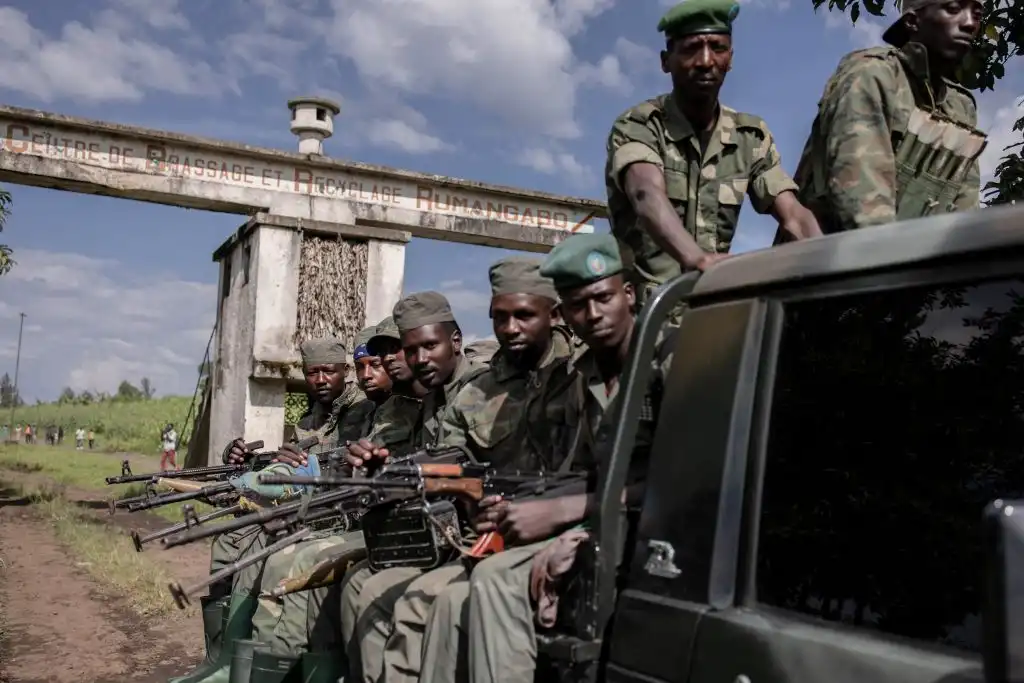
The main rebel group in eastern Democratic Republic of Congo (DRC), the M23 movement, has announced it will no longer participate in peace negotiations with the government.
The group stated that it will not return to the table unless the Congolese authorities fully comply with the terms of a recent ceasefire agreement signed in Qatar.
M23 spokesperson Lawrence Kanyuka accused the government of dishonoring its commitments.
He told the Great Lakes service that Kinshasa “doesn’t want peace,” adding that government forces had continued launching offensives against rebel-held positions.
Ceasefire Deal Under Strain
Last month in Qatar, both sides agreed to a ceasefire pact aimed at paving the way for a broader peace deal. However, the fragile truce has quickly broken down.
Kanyuka claimed the Congolese army ignored the agreement, which required both parties to refrain from attacks.
In response, the Congolese armed forces denied the accusations, saying the M23 rebels had instead been carrying out near-daily assaults in North Kivu and South Kivu provinces.
The latest round of negotiations was supposed to resume on Monday in Qatar. Yet, M23’s representatives were absent, signaling a deepening rift.
Control of the East at Stake
The conflict escalated in January when M23 fighters seized large parts of eastern DRC, including the strategic regional capital Goma.
The area is highly contested due to its rich deposits of cobalt, coltan, and other critical minerals.
The UN reports that thousands of people have been killed in the fighting, while hundreds of thousands more have been forced from their homes.
Humanitarian agencies warn of a worsening crisis if peace talks collapse entirely.
Rwanda’s Alleged Role
The crisis also involves regional politics. The DRC government, the United Nations, and several Western countries have accused Rwanda of backing the M23 movement.
Although Rwanda participated in Washington-brokered peace talks earlier this year, Kigali has repeatedly denied supporting the rebels.
US Interests in Congo’s Minerals
The conflict has drawn attention from Washington.
The United States brokered a separate peace deal between DR Congo and Rwanda in June, which former President Donald Trump described as a “glorious triumph.”
Analysts say the deal could give the US greater access to DR Congo’s vast mineral wealth, including resources essential for electric vehicles, smartphones, and renewable energy technologies.
However, observers caution that this agreement, like many before it, risks failure if the M23 crisis remains unresolved.
A Pattern of Broken Agreements
Eastern DRC has seen decades of conflict, with countless ceasefires and peace deals collapsing before implementation. The Qatar agreement, due to be finalized this week, is now in jeopardy.
Despite efforts from mediators, both sides appear unwilling to compromise.
As a result, civilians remain trapped in the middle of a conflict fueled by regional rivalries and competition for natural resources.
For many in DR Congo, the collapse of the latest peace initiative is yet another reminder of the region’s long struggle for stability.


 Armenian Dram
 Ghana Cedi
 Gambian Dalasi
 Guinea Franc
 Nigerian Naira
 CFA Franc BEAC