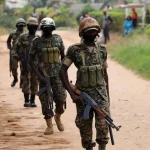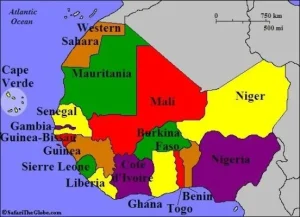
West African leaders have agreed to establish a permanent and structured regional security framework to confront the escalating threat of terrorism, transnational crime, and governance challenges across the sub-region.
The decision was reached at the end of a two-day Consultative Conference on Regional Cooperation and Security held in Accra, Ghana, from January 29 to 30, 2026. The meeting brought together Heads of State, senior government officials, and regional and international partners amid growing concern over worsening insecurity in West Africa.
The conference was chaired by Ghana’s President, John Dramani Mahama, with Presidents Julius Maada Bio of Sierra Leone and Joseph Boakai of Liberia leading their respective delegations. Other participating countries included Burkina Faso, Mali, Mauritania, Nigeria, Senegal, and Togo.
Senior officials overseeing foreign affairs, defence, security, and intelligence attended the meeting, alongside representatives of the African Union Commission, the United Nations Development Programme (UNDP), and civil society organisations.
West Africa now global epicentre of terrorism
In a joint communiqué issued at the close of the conference, leaders described West Africa as the current global epicentre of terrorism and violent extremism. According to the communiqué, the region records an average of eight terrorist attacks daily, resulting in about 44 deaths every day.
The leaders noted that more than half of all terrorism-related deaths worldwide now occur in West Africa and neighbouring areas, underscoring the urgency for coordinated and sustained regional action.
They stressed that West African countries are deeply interconnected through shared borders, ecosystems, trade routes, and cross-border communities, making unilateral responses ineffective.
“Insecurity in one country rapidly spills into others,” the leaders warned, adding that fragmented responses impose significant economic and security costs on the region.
Permanent framework to replace ad-hoc responses
The conference agreed that episodic diplomacy and limited coordination are no longer sufficient to address the scale and complexity of current threats. Instead, leaders resolved to rebuild and deepen sub-regional cooperation through a permanent and structured framework.
The proposed framework will focus on shared programmes, harmonised standards, joint infrastructure priorities, and coordinated management of security, economic, and social risks.
Leaders reaffirmed their commitment to regional solidarity, respect for national sovereignty, and stronger cooperation to address evolving peace, security, and governance challenges.
Boosting intelligence sharing and cross-border action
On counterterrorism, the conference recognised the strong link between violent extremism and transnational organised crime. Participants agreed to intensify intelligence and information sharing, hold regular regional security reviews, and harmonise legal frameworks to enable cross-border prosecution of terrorism-related offences while safeguarding human rights.
The leaders also pledged to strengthen de-radicalisation programmes across the region.
To address porous borders, the conference agreed to explore “hot pursuit” arrangements through bilateral, minilateral, or multilateral agreements, allowing security forces to pursue criminal elements across borders under agreed legal frameworks.
MoU, human security focus, and climate risks
The meeting resolved to develop a foundational Memorandum of Understanding (MoU) and supporting protocols on regional cooperation and security within six months. A draft MoU is expected within three months under the leadership of Ghana’s Minister for Foreign Affairs, for consideration by Heads of State.
The MoU will also outline mechanisms to combat trafficking in arms, narcotics, and persons.
Acknowledging that military action alone cannot secure lasting peace, leaders committed to a shift toward a “human security” approach that prioritises access to food, healthcare, education, employment, and effective governance.
Participants also agreed to leverage digital and emerging technologies to modernise governance systems, improve border management, and enhance public service delivery.
Recognising climate change as a major threat multiplier, the conference resolved to integrate climate and food security considerations into regional peace and security planning, alongside the development of a collective disaster preparedness and humanitarian response framework.
Biannual platform for sustained coordination
The leaders recommended institutionalising the consultative conference as a biannual platform for sustained dialogue and coordination. A dedicated monitoring mechanism will also be established to track implementation of resolutions ahead of future meetings.
According to the communiqué, the foundational MoU will serve as the legal backbone for future bilateral, minilateral, and multilateral security cooperation, including resource mobilisation and long-term regional stability efforts.




 Armenian Dram
 Ghana Cedi
 Gambian Dalasi
 Guinea Franc
 Nigerian Naira
 CFA Franc BEAC