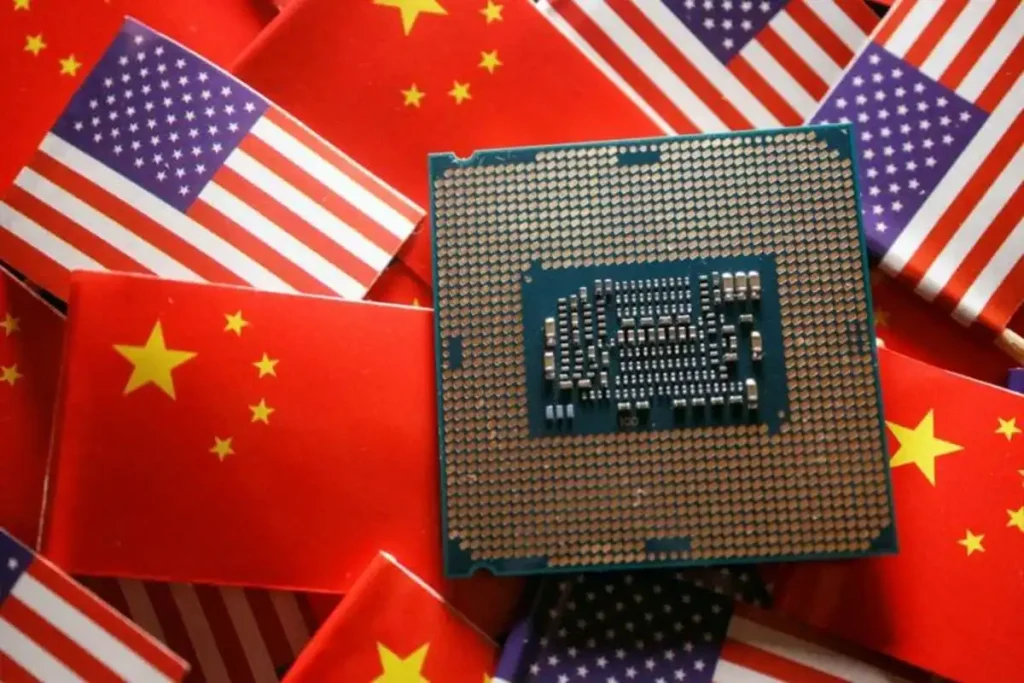
Intel has reportedly tested semiconductor manufacturing equipment this year from a supplier with significant ties to China.
The decision has sparked concern among national security experts, as two of the supplier’s international subsidiaries were previously hit with U.S. sanctions.
Sources with direct knowledge of the situation claim Intel evaluated tools from ACM Research, a company headquartered in Fremont, California.
Last year, U.S. regulators barred two of ACM’s units located in Shanghai and South Korea—from receiving American technology. Authorities alleged that these units aided the Chinese government in adapting commercial technology for military purposes. ACM has denied these claims.
Testing for Next-Gen Chips
The equipment in question consists of two “wet etch” tools. These specialized machines are used to remove material from silicon wafers during chip production.
According to sources, the tools were being tested for potential use in Intel’s most advanced manufacturing process, 14A, which is slated for an initial launch in 2027.
It remains uncertain whether Intel has decided to adopt the tools permanently.
- Intel’s Position: The tech giant refused to confirm whether it tested ACM’s equipment for the 14A process. In a statement, Intel maintained that ACM’s tools “are not used in our semiconductor production process” and emphasized its compliance with all U.S. laws.
- ACM’s Response: While declining to name specific clients, ACM confirmed that its U.S. team has delivered tools from its Asian operations to domestic customers. It also acknowledged shipping three tools to a “major U.S.-based semiconductor manufacturer” for testing purposes.
National Security Alarms
The testing has triggered alarm bells among policymakers and China hawks. Critics fear that integrating equipment from a firm with sanctioned subsidiaries into advanced U.S. production lines could expose sensitive technical data to Beijing or create vulnerabilities for sabotage.
Chris McGuire, a former official at the White House National Security Council, warned that this situation reveals “egregious gaps” in American technology protection policies.
“Chinese tools could easily be remotely or physically manipulated by Beijing to degrade or even halt U.S. chip production,” McGuire argued. “And U.S. companies should play no part in helping China improve its chipmaking tools.”
Deep Roots in China
Although ACM Research is based in California, its operations are heavily concentrated in China.
- Ownership: Founded in 1998 by David Wang, who still owns over 57% of the voting shares.
- R&D Center: The majority of the company’s research and development takes place in Shanghai, where it established a facility in 2006.
- Key Clients: ACM sells equipment to sanctioned Chinese firms, including YMTC and SMIC. SMIC alone accounts for roughly 14% of ACM’s sales.
ACM defended its structure, stating that its U.S. operations are “bifurcated and isolated” from the sanctioned Shanghai unit. The company insists that robust safeguards are in place to protect customer trade secrets.
Expansion in the ‘Silicon Forest’
The controversy comes as ACM expands its U.S. footprint. In November 2023, the company opened a new facility in Hillsboro, Oregon, an area dubbed the “Silicon Forest.”
The new hub is located just one mile from Intel’s flagship R&D and manufacturing plant.
A report by hedge fund Kerrisdale Capital suggested this location was strategic. The fund noted that ACM has been upgrading its local capabilities, likely to support on-site testing and strengthen its relationship with Intel.
Competitive Pressures
This development unfolds amidst fierce global competition. Beijing has been aggressively building its domestic semiconductor sector since 2015.
While ACM holds only an 8% share of the global cleaning tool market, its tools are often 20% to 30% cheaper than those from established Western rivals like Applied Materials.
This price advantage puts pressure on the global market, even as U.S. lawmakers push to ban chipmakers receiving government subsidies from utilizing Chinese equipment.
READ ALSO: Crackdown at TikTok Awards: Sixth Influencer Detained in Ethiopia









 Armenian Dram
 Ghana Cedi
 Gambian Dalasi
 Guinea Franc
 Nigerian Naira
 CFA Franc BEAC