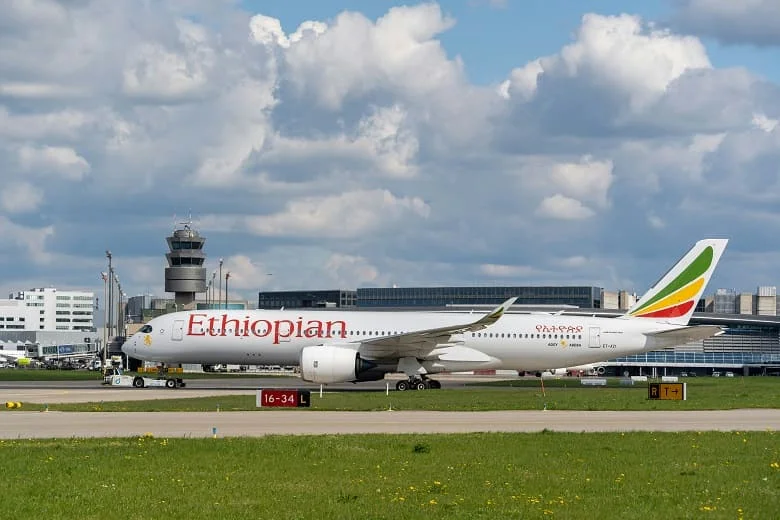
Under the expansive skies of the Oromia region, a new chapter in African aviation history began this Saturday, January 10, 2026. In the town of Bishoftu, southeast of the capital, the rumble of heavy machinery marked the official start of construction on the Bishoftu International Airport. This project is set to become the most ambitious infrastructure undertaking the continent has ever seen.
Prime Minister Abiy Ahmed personally announced the commencement of the project. He framed it not just as an airport, but as a strategic “multi-airport” vision. Consequently, this move is designed to cement Ethiopia’s position as the primary intercontinental gateway to Africa.
A Vision of Unprecedented Scale
The project’s figures are as staggering as its ambition. With an estimated price tag of $12.7 billion, the new hub is designed to dwarf existing infrastructure. Once the five-year construction period concludes, the facility will sprawl across a massive 35-square-kilometer site.
This new facility is specifically designed to overcome the limitations of the current Bole International Airport in Addis Ababa. While Bole can currently manage up to 25 million passengers annually, the Bishoftu hub will be capable of handling a staggering 110 million passengers per year at full capacity.
“This strategy aims to future-proof Ethiopia’s role as Africa’s leading air transport gateway,” Prime Minister Abiy stated on social media.
The ultimate goal is to provide Ethiopian Airlines—already the continent’s most successful carrier—the physical room to grow. By enhancing its global competitiveness, Ethiopia intends to expand trade and tourism corridors across the entire continent.
Beyond the Tarmac: A Seamless Link
Engineers are not just building runways; instead, they are constructing a modern logistics ecosystem. To ensure the new hub remains accessible to the heart of Addis Ababa, the government is launching two massive transport links:
- A Multi-Lane Motorway: This road is designed for high-volume vehicle traffic moving directly to the capital.
- High-Speed Rail: A 38-kilometer railway line where trains will reach speeds of up to 200 km/h (124 mph). This allows passengers to whisk between the city and the terminal in mere minutes.
Financing the “African Dream”
Such a massive undertaking requires a global coalition of investors. While Ethiopian Airlines is providing a significant portion of the initial financing, international partners are also stepping up:
- African Development Bank (AfDB): This institution has already earmarked $500 million for the project.
- Pending Tranches: Furthermore, authorities are currently in negotiations with the Asian Development Bank, the European Investment Bank, and the U.S. Development Finance Corporation.
The Human and Regional Context
The path to this “aviation city” has not been without its challenges. To clear the way for the 35-square-kilometer site, approximately 2,500 farmers were displaced. According to Ethiopian Airlines CEO Mesfin Tasew Bekele, these families were re-housed last year in a resettlement program costing $350 million.
Furthermore, the construction begins against a backdrop of ongoing security tensions in the Amhara and Oromia regions. Despite these internal struggles, the government is betting that world-class infrastructure will act as a stabilizer. Ultimately, they hope to attract foreign tourism and investment to the nation through these developments.
A Legacy of “Mega-Projects”
This airport is the latest in a series of giant steps for Ethiopia. Last year, the nation officially inaugurated the Grand Ethiopian Renaissance Dam, the largest on the continent.
With extensive urban renewal projects already transforming the streets of Addis Ababa, the Bishoftu project represents the crown jewel of Ethiopia’s bid to become an intercontinental superpower.
MORE NEWS: TotalEnergies Secures Fresh Lebanon Offshore License









 Armenian Dram
 Ghana Cedi
 Gambian Dalasi
 Guinea Franc
 Nigerian Naira
 CFA Franc BEAC