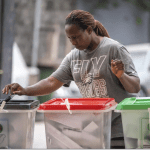
A crucial manual recount of votes from Honduras’ presidential election remained paralyzed on Wednesday.
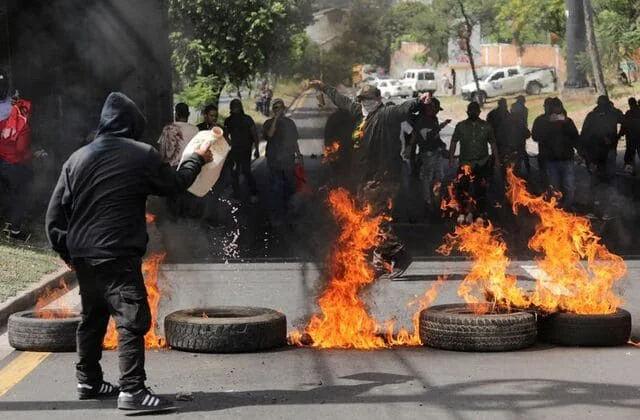
The delay is being driven by ongoing protests that have blocked electoral staff from accessing their offices, alongside demands from the ruling party for a review of every single ballot cast.
The special recount, which involves approximately 15% of the tally sheets containing “inconsistencies,” has the potential to overturn the preliminary results of the November 30 election. Originally scheduled to begin late last week, the process has faced nearly two weeks of disruptions.
Current Standings and the “Trump Factor”
With nearly 100% of the tally sheets processed in the initial machine count, the race remains tight but clear:
- Nasry Asfura (National Party): The 67-year-old former mayor of Tegucigalpa maintains a lead of over 43,000 votes. Notably, Asfura has received a public endorsement from U.S. President Donald Trump.
- Salvador Nasralla (Liberal Party): The centrist candidate trails in second place.
- Rixi Moncada (LIBRE Party): The candidate for the ruling leftist party is currently in a distant third.
Despite the current margin, the tally sheets flagged for the special hand count represent hundreds of thousands of votes—more than enough to close the gap and potentially flip the victory from Asfura to Nasralla.
The Standoff: Partial vs. Full Recount
Tensions have escalated as the ruling LIBRE party and second-place candidate Nasralla are now demanding a full recount of all votes. They allege fraud took place during the count, though no concrete evidence has been presented to support these claims.
Conversely, the National Electoral Council (CNE) states that a full recount is not legally justified.
In a document addressed to fellow officials, CNE President Ana Paola Hall clarified the legal boundaries. She stated that electoral law only permits “special reviews and recounts when there are objective and specific grounds.” She added that there is currently no legal basis to grant a full recount without specific proof of irregularities.
Protests Block the Process
Election officials have pinned the blame for the delay directly on LIBRE supporters.
“Our officials cannot enter to perform their duties and the staff sent to do the special scrutiny (personnel from the political parties) refuse to do their job and it overwhelms the CNE,” Hall said on Tuesday night.
Political analyst Henry Salinas argued that the electoral body has done its part, shifting the responsibility to the political actors. “The CNE has to provide the facilities and create the necessary conditions, and it has done so… At this point, the delay is the fault of the political parties,” Salinas said.
Escalating Tensions
On Wednesday afternoon, the ruling LIBRE party mobilized its base, calling on supporters to gather at the presidential palace. They are protesting what they describe as an “electoral coup” and citing “interference” by Donald Trump, who linked Washington’s support for Honduras to an Asfura victory.
Currently, just over 2,792 tally sheets are marked for the special review. The CNE faces a tight deadline of December 30 to officially declare a winner.
The victor is scheduled to take office at the end of January for the 2026–2030 term, succeeding current President Xiomara Castro.
Major international observers, including the European Union and the Organization of American States (OAS), have not expressed concerns regarding systematic fraud in the election.
Ivory Coast Gold Miners Bow to Government on New Royalty Tax





 Armenian Dram
 Ghana Cedi
 Gambian Dalasi
 Guinea Franc
 Nigerian Naira
 CFA Franc BEAC