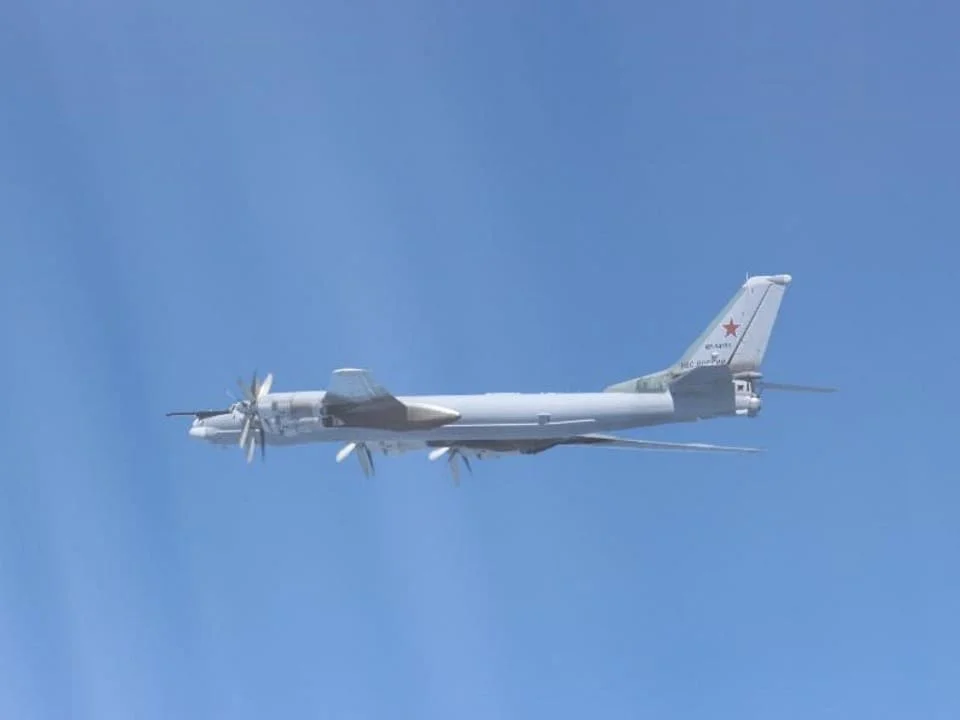
South Korea and Japan reacted furiously on Wednesday after Chinese and Russian military aircraft conducted joint patrols around their territories. The provocative move prompted both Seoul and Tokyo to scramble fighter jets in response.
South Korea lodged formal protests with representatives of both nations. Meanwhile, Japan conveyed its “serious concerns” regarding the threat to its national security.
Details of the Joint Patrol
According to officials in Tokyo, the operation involved high-stakes coordination:
- Russian Aircraft: Two Tu-95 nuclear-capable bombers flew from the Sea of Japan on Tuesday.
- Chinese Aircraft: They rendezvoused with two Chinese H-6 bombers in the East China Sea.
- Flight Path: The group conducted a joint flight around the Japanese archipelago.
Japanese Defence Minister Shinjiro Koizumi condemned the flights on social media. He described them as “clearly intended as a show of force against our nation”. Government spokesman Minoru Kihara confirmed that diplomatic channels were used to express Japan’s security concerns to both Beijing and Moscow.
South Korea’s Response
Seoul reported that the Russian and Chinese warplanes entered its Air Defence Identification Zone (KADIZ).
- Tactical Action: South Korea immediately deployed fighter jets to take tactical measures and prepare for contingencies.
- Diplomatic Action: A formal complaint was lodged with the defense attachés of both China and Russia stationed in Seoul.
Lee Kwang-suk, a director general at Seoul’s defense ministry, stated that the military would continue to respond actively to such activities in compliance with international law. The aircraft were detected before they entered the KADIZ, a zone distinct from sovereign airspace used to monitor air traffic for security.
‘Routine Exercise’ and Rising Tensions
Beijing confirmed later on Tuesday that it organized the drills with Russia as part of “annual cooperation plans”. Moscow also described the eight-hour operation as a routine exercise.
However, the patrol occurred amidst a diplomatic dispute between Japan and China regarding Taiwan.
- Takaichi’s Comments: Tensions flared after Japanese Prime Minister Sanae Takaichi suggested last month that Japan would intervene militarily if China attacked Taiwan.
- Carrier Incident: Earlier this week, Tokyo scrambled jets after exercises involving China’s Liaoning aircraft carrier near Japanese waters. Japan also summoned Beijing’s ambassador after aircraft from the carrier reportedly locked radar onto Japanese jets.
READ ALSO: EU Approves Meta’s Revised Pay-or-Consent Model Alternative








 Armenian Dram
 Ghana Cedi
 Gambian Dalasi
 Guinea Franc
 Nigerian Naira
 CFA Franc BEAC