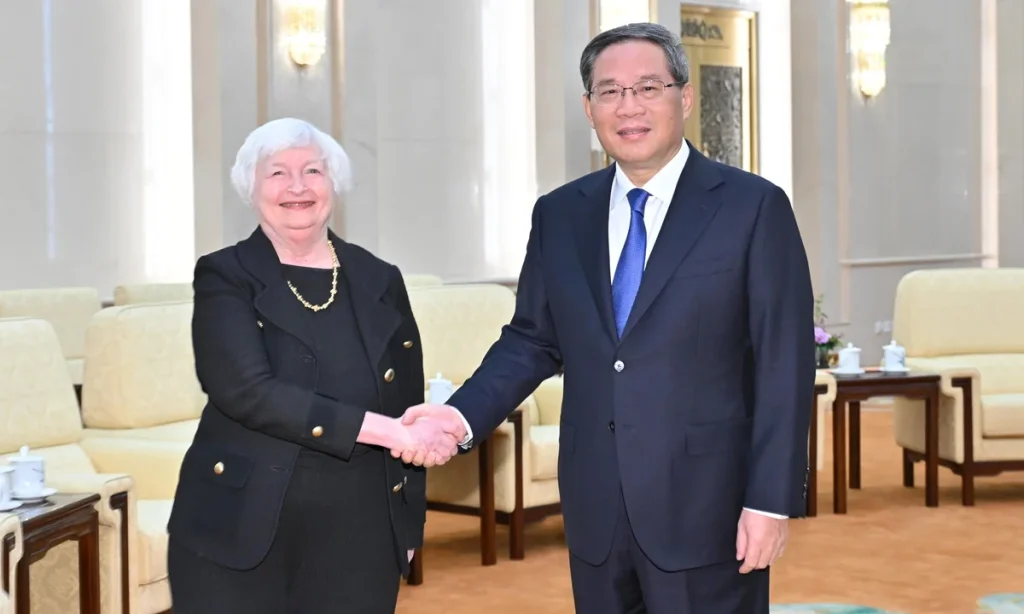
On September 21, 2025, a group of U.S. lawmakers traveled to Beijing, meeting China’s Premier Li Qiang to advocate for stronger ties between the world’s two largest economies.
This visit, the first by a U.S. House of Representatives delegation since 2019, aimed to ease tensions and foster dialogue after years of strained relations.
Breaking a Long Pause
The COVID-19 pandemic halted formal House visits in 2020, and disputes over the virus’s origins, trade restrictions, semiconductor policies, TikTok ownership, South China Sea activities, and Taiwan’s status deepened the divide.
The bipartisan group, led by Democratic Representative Adam Smith, former chair of the House Armed Services Committee, described the trip as an “ice-breaking” effort to rebuild communication.
Push for More Engagement
“This visit shouldn’t be the first in six or seven years,” Smith told Premier Li, according to a U.S. embassy pool report. “We need more exchanges to strengthen our relationship.”
Li echoed the sentiment, noting the visit’s role in advancing bilateral ties. The trip follows a recent call between Presidents Donald Trump and Xi Jinping, signaling efforts to stabilize relations.
Context of Past Tensions
During China’s pandemic-era border closures, U.S. lawmakers shifted focus to other regions, particularly Taiwan, which Beijing claims as its territory.
A 2022 visit to Taiwan by then-House Speaker Nancy Pelosi sparked outrage in China, leading to large-scale military drills near the island.
In 2023, Representative Michael McCaul’s Taiwan trip further angered Beijing, resulting in sanctions and pledges to bolster Taiwan’s military support.
Looking Ahead
The Beijing visit marks a step toward renewed dialogue amid complex issues. Both nations face challenges like trade disputes and geopolitical tensions, but the delegation’s trip signals a mutual interest in finding common ground.
As U.S.-China relations evolve, such exchanges could pave the way for more consistent and constructive engagement.







 Armenian Dram
 Ghana Cedi
 Gambian Dalasi
 Guinea Franc
 Nigerian Naira
 CFA Franc BEAC