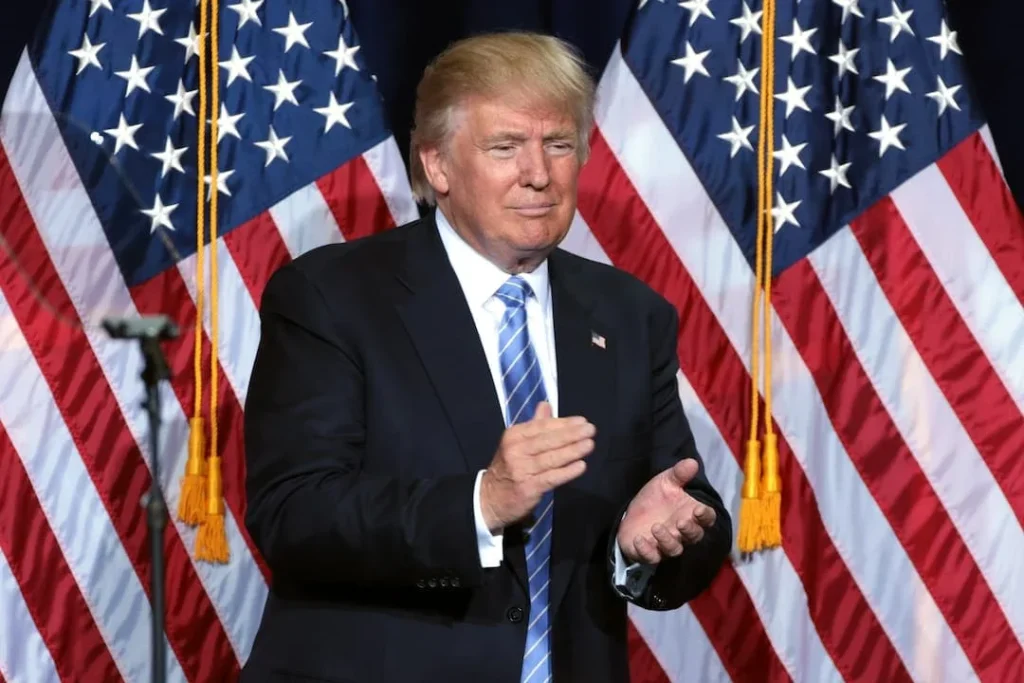
The landscape of international migration underwent a seismic shift on Wednesday, January 14, 2026. President Donald Trump announced an indefinite pause on immigrant visa processing for 75 nations, including Nigeria.
This “America First” directive is expected to delay the plans of at least 5,000 Nigerian immigrants annually who intend to live in the United States.
The Immediate Impact on Nigeria
Data from the U.S. consulate in Lagos highlights the significant scale of this disruption. In 2023, the U.S. issued 5,626 immigrant visas to Nigerians, which was a notable increase from the previous year. By 2024, the total number of Nigerians receiving any form of U.S. visa—both for permanent residency and temporary visits—surpassed 70,000.
According to the new policy, the processing freeze will officially begin on January 21, 2026. This measure specifically targets countries that Washington claims pose screening challenges or produce migrants who might rely heavily on public welfare.
Why the U.S. is Freezing Visas
A spokesperson for the State Department confirmed that the pause aims to ensure new immigrants do not “extract wealth” from the American public. The administration argues that certain nations have high rates of visa overstays and security vetting difficulties.
Specifically, for Nigeria, the proclamation cited persistent security challenges and radical extremist activity in certain regions. These conditions, according to the White House, create “substantial screening and vetting difficulties” for U.S. officials. Consequently, the entry of Nigerian nationals as immigrants and on several non-immigrant categories—such as B-1, B-2, F, M, and J visas—is now suspended.
Global Reach of the Policy
The restrictions are remarkably broad, affecting a total of 75 countries across the globe. This list includes 27 African nations, such as Ghana, Egypt, Ethiopia, and Somalia. It also impacts 22 countries in Asia, 13 in North America and the Caribbean, and several others in Europe and South America.
Furthermore, this development comes only a week after the U.S. imposed a visa bond requirement. This separate policy requires nationals from 38 countries, including Nigeria, to provide a bond of up to $15,000 to ensure they do not overstay their legal visit.
Experts React: “A Reverse Gear for Globalization”
Diplomatic experts have expressed deep concern over the move. Ogbole Amedu-Ode, a former Nigerian Ambassador to Mexico, described the ban as a contradiction of America’s traditional advocacy for the free movement of people. He characterized the policy as a “reverse gear” for the phenomenon of globalization.
Similarly, former Ambassador Godknows Igali acknowledged Washington’s sovereign right to set policy but urged a review of the bilateral relationship. He emphasized that Nigerians in the U.S. are historically hardworking and highly skilled. He argued that most Nigerians contribute significantly to the American system rather than becoming a financial liability.
Finally, foreign affairs analyst Charles Onunaiju warned that this is “not a normal time” in international relations. He noted that the Trump administration is leveraging an extremist anti-immigration posture that was a central part of its campaign. He advised Nigerians to “prepare for the worst,” as further tightening of travel policies may be on the horizon.
______________________________________
READ ALSO: Semenyo Leads City to 2-0 Semi-Final Win







 Armenian Dram
 Ghana Cedi
 Gambian Dalasi
 Guinea Franc
 Nigerian Naira
 CFA Franc BEAC