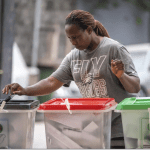
As more than 20 million Ugandans prepare to head to the polls this Thursday, opposition leader Bobi Wine has issued a stern warning. He stated that any attempt by the government to manipulate the results will be met with nationwide mass protests.
Wine, a popular singer-turned-politician, described the upcoming ballot as a “protest vote.” Furthermore, he urged citizens to “take charge” of the democratic process to ensure their voices are heard effectively.
The Battle for Uganda’s Future
At 81 years old, President Yoweri Museveni is seeking to extend his nearly 40-year reign. He currently remains in firm control of the state’s security apparatus and administrative machinery. His primary challenger is the 43-year-old Wine, who is making his second high-stakes bid for the presidency.
During his 2021 campaign, Wine faced significant obstacles, including violent state repression and widespread allegations of electoral fraud. Consequently, the opposition leader remains highly skeptical about a peaceful transition of power this year.
“Are we taking power? That is a question for the population, the international community, and for General Museveni, who is currently holding power through the use of the gun.” — Bobi Wine
A Climate of Repression
International observers and human rights organizations, including the United Nations and Amnesty International, have raised alarms regarding the pre-election environment.
They have accused Ugandan authorities of a systematic crackdown on dissent. Specifically, they cite the frequent arrests of opposition supporters and the heavy restriction of political gatherings.
While Wine acknowledged that calling for protests could lead to further state-sponsored violence, he maintained that non-violent resistance is a legitimate tool for change. He argued that even the most repressive regimes have historically been toppled by the power of public demonstrations.
The Youth Surge in East Africa
In the capital city of Kampala, massive, youthful crowds continue to rally behind Wine. This surge in support reflects a broader trend across East Africa, where young populations are expressing deep-seated anger over three key issues:
- Diminishing Democratic Space: Increasing restrictions on free speech and political assembly.
- Economic Inequality: A severe lack of job opportunities and rising living costs.
- Governance Issues: A strong desire for fresh leadership after decades of the same administration.
READ ALSO: New UN Head Lauds Kakuma Integration During Kenya Visit







 Armenian Dram
 Ghana Cedi
 Gambian Dalasi
 Guinea Franc
 Nigerian Naira
 CFA Franc BEAC