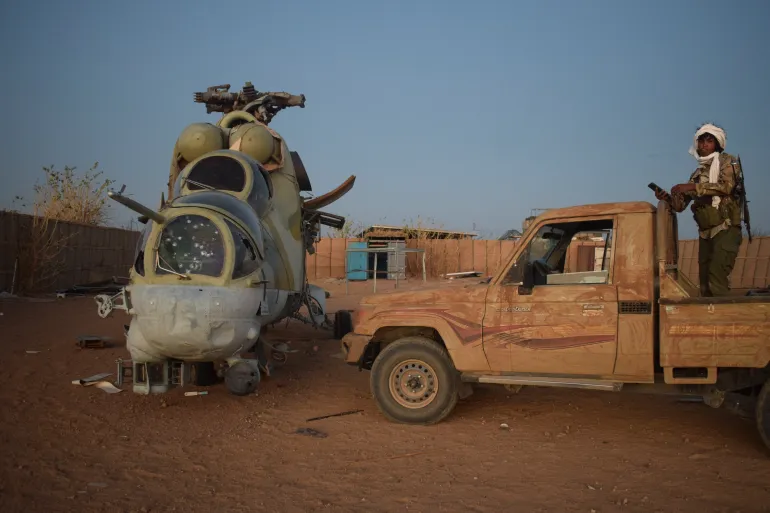
At least 30 people have been killed in fresh attacks carried out by suspected al-Qaeda-linked fighters in central Mali, marking one of the deadliest incidents since armed groups intensified coordinated assaults across the country late last month.
According to local, security, and administrative sources, the attacks targeted the villages of Korikori and Gomossogou in the Mopti region on Wednesday.
While AFP reported a death toll of at least 30, separate sources quoted by Reuters, including a diplomat, an aid worker, and a security official, said the number of victims could exceed 50.
The attacks are believed to have been carried out by fighters linked to Jama’at Nusrat al-Islam wal-Muslimin (JNIM), an al-Qaeda-affiliated armed group that has intensified operations across Mali in recent weeks.
The latest violence comes just a day after heavily armed fighters stormed the Kenieroba Central Prison, located about 60 kilometres southwest of the capital, Bamako.
The prison reportedly houses about 2,500 inmates, including dozens classified by authorities as “high-value” prisoners.
Mali has witnessed a sharp escalation in violence since April 25 and 26 when JNIM reportedly coordinated attacks with the Tuareg-led Azawad Liberation Front (FLA), further destabilising the country’s already fragile security situation.
Analysts say the renewed attacks demonstrate growing cooperation between armed groups with different agendas but shared opposition to Mali’s military-led government.
The violence has also deepened humanitarian concerns in central Mali, where communities are already struggling with severe drought conditions and conflicts over scarce water resources.
Al Jazeera correspondent Nicolas Haque noted that tensions between Fulani communities and Dogon militia groups backed by Malian forces have heightened instability in the region.
Speaking during a press conference in Bamako, Malian army commander Djibrilla Maiga acknowledged that armed groups remain active and dangerous despite military operations aimed at disrupting their activities.
“The threat is still present,” Maiga said, adding that the military continues to target insurgent movements and supply routes.
According to him, armed fighters are attempting to impose a blockade on Bamako by establishing checkpoints along major roads leading into the capital.
Maiga also revealed that recent attacks included attempts to target senior government officials, including Defence Minister Sadio Camara and military leader Assimi Goita.
He claimed security forces successfully neutralised several attackers and prevented further damage.
The Malian government has maintained that the situation remains under control, despite the worsening security crisis and expanding influence of armed groups across the country.
The resurgence of violence has renewed concerns over regional stability in the Sahel, where extremist groups continue to exploit political instability and weak state control to expand operations.






 Armenian Dram
 Ghana Cedi
 Gambian Dalasi
 Guinea Franc
 Nigerian Naira
 CFA Franc BEAC