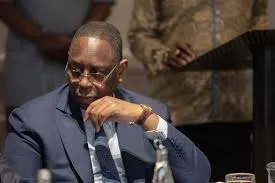
Former Senegalese President Macky Sall is set to audition this week for the role of Secretary-General of the United Nations, emerging as the only African contender among four candidates vying to succeed António Guterres.
The high-stakes selection process enters a critical phase with a series of public “interactive dialogues” at the UN General Assembly, where candidates will present their vision and respond to questions from representatives of the organisation’s 193 member states.
The auditions begin Tuesday with former Chilean President Michelle Bachelet, followed by Rafael Mariano Grossi, head of the International Atomic Energy Agency. On Wednesday, UN trade chief Rebeca Grynspan will take the stage, before Sall concludes the sessions.
The race marks a notable shift from 2016, when 13 candidates contested the position eventually won by Guterres. Analysts say the reduced field reflects a more cautious geopolitical climate, with heightened global tensions and divisions among major powers influencing candidate participation.
According to Richard Gowan of the International Crisis Group, potential contenders are increasingly wary of diplomatic fallout, particularly if their positions clash with influential nations such as the United States or China.
“The risks are higher now. A misstep could carry real diplomatic consequences,” he noted.
The selection comes at a time when the UN faces growing criticism over its limited ability to respond effectively to global conflicts, including crises in Ukraine, Gaza, and Iran, largely due to divisions within the Security Council.
Traditionally, the role of Secretary-General rotates across regions. With Guterres representing Europe and his predecessor from Asia, attention has turned to Latin America as the next likely region—though Africa and Eastern Europe remain in contention.
Sall’s candidacy, however, faces its own challenges. While he was nominated by Burundi, his home country Senegal has not formally endorsed him, and the African Union has yet to present a unified backing.
Meanwhile, gender advocacy groups continue to push for the appointment of the first female UN chief, with Bachelet and Grynspan among those seen as strong contenders. Support for a woman to lead the global body has also been echoed by Guterres and key Security Council members including the UK and France.
Under UN procedures, the final decision will rest with the Security Council, where the five permanent members hold veto power, before being confirmed by the General Assembly.
As the auditions unfold, candidates are expected to outline their strategies for restoring the UN’s influence, addressing global conflicts, and navigating an increasingly divided world order.
 Armenian Dram
 Ghana Cedi
 Gambian Dalasi
 Guinea Franc
 Nigerian Naira
 CFA Franc BEAC