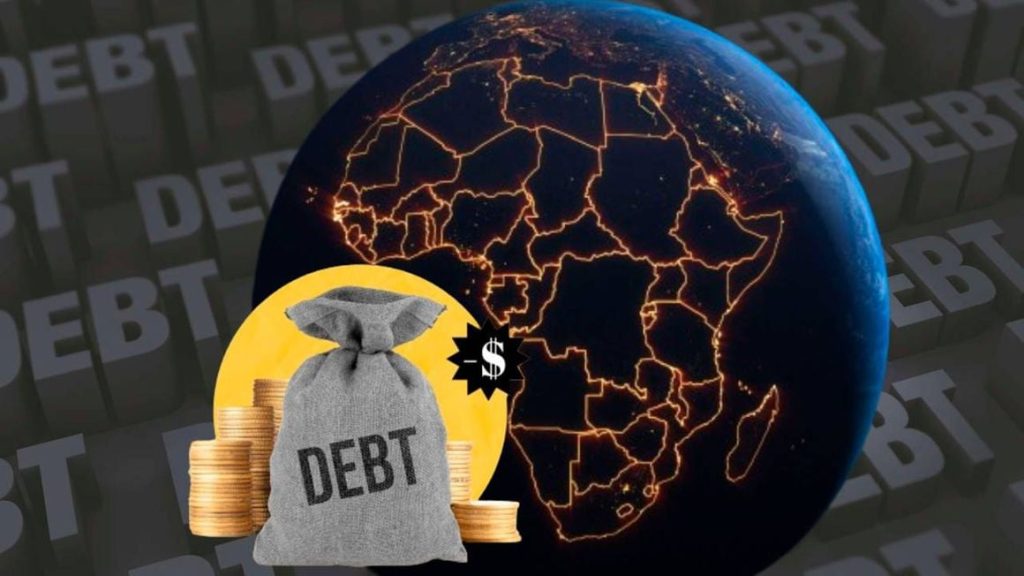
In 2022, Africa’s loan defaults reached a record high of $149.4 billion, marking the highest level in three decades, largely due to increasing borrowing costs that delayed repayments. This surge in defaults was primarily driven by the Covid-19 pandemic, Russia’s invasion of Ukraine, and global interest rate hikes to curb inflation.
The African Export-Import Bank (Afreximbank) highlighted East Africa as the region with the most significant loan defaults, with Kenya and Tanzania leading in sovereign loan defaulters. East African countries had an average debt-to-GDP ratio of 54.5% between 2017 and 2023, while Central Africa reported the lowest at 35.4%. West Africa ranked second in debt burden, followed by North Africa and Southern Africa.
According to the report, titled State of Play of Debt Burden in Africa 2024: Dynamics and Mounting Vulnerability, the amount of defaulted loans by African countries rose significantly from $100.2 billion in 2020 and $112.2 billion in 2021 to $149.4 billion in 2022. These defaults have not only caused financial crises but also led to reduced investor confidence across the continent. The report notes that over half of the 52 African nations assessed are at high risk of debt distress or already in debt crises.
The sharp increase in loan defaults is attributed to a challenging global macroeconomic environment, where intersecting crises have continued to strain fiscal revenues. The report also warns of a potential “domino effect” of defaults, especially from 2024 onwards, when many nations face significant repayments on international bonds.
Interestingly, 2023 saw a slight reversal in this trend, with loan defaults dropping by 13% to $129.9 billion. Many distressed countries began restructuring their debt in more transparent and innovative ways.
Africa’s debt has grown substantially in the last 15 years, with the debt-to-GDP ratio jumping by 39.3 percentage points from 2008 to 2020. In 2023, the ratio stood at 68.6%, up by 1.3 percentage points compared to 2022.
The report identifies several contributors to the continent’s debt crisis. “Other official creditors,” foreign currency bonds, and the Paris Club were responsible for nearly 70% of loan defaults in 2022. For instance, Tanzania defaulted on $1.3 billion owed to official creditors, while Kenya defaulted on $305 million in private creditor loans. In total, countries like Sudan, Zimbabwe, Ghana, Zambia, and Libya had significant defaults across various creditor types.
Defaults on foreign currency bonds were primarily driven by Ghana, Zambia, and Mozambique, while Sudan and Zimbabwe were among the top defaulters on Paris Club loans. The report also highlights China’s role, where loan defaults to Chinese creditors dropped from $8.8 billion in 2021 to $5.3 billion in 2022, partly due to China’s cancellation of 23 interest-free loans to 17 African nations.
In 2023, Zambia and Ghana were among the primary defaulters, especially in defaults related to China and foreign currency bonds. Suspicion has grown since 2016 that several African countries, including Kenya, Ethiopia, Djibouti, Mozambique, Zambia, and Ghana, have defaulted on Chinese loans. However, only a few, like Mozambique, Zambia, and Ghana, have defaulted on Eurobond payments during this period.
Sudan and Zimbabwe continue to dominate the default landscape for Paris Club and official creditors, while Ghana stands out for its large default on local currency debt, owing more than $4 billion to bondholders by May 2027.
Africa’s external debt is highly concentrated, with 67% of the continent’s total debt held by just ten countries. Egypt and South Africa account for the largest shares, followed by Nigeria, Morocco, Mozambique, and others.
African nations have seen their external debt rise significantly since 2008, reaching $1.2 trillion in 2023, which makes up nearly 60% of the region’s total public debt. This growing share of external debt poses serious risks to the continent’s debt sustainability and its ability to service these loans.
There has also been a shift in Africa’s creditor landscape over the last decade. The continent has moved away from traditional Paris Club creditors toward commercial and non-Paris Club lenders, highlighting the growing role of private lending in Africa’s debt market. As a result, private debt as a share of Africa’s GDP increased from 18.8% in 2008 to 41.6% in 2023, with private debt now accounting for more than half of Africa’s external debt, surpassing bilateral and multilateral creditors






 Armenian Dram
 Ghana Cedi
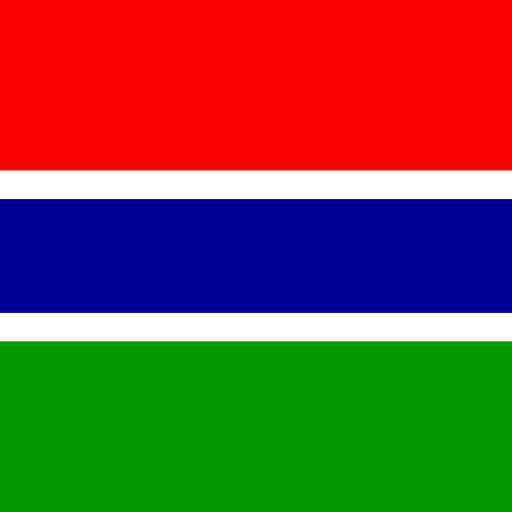 Gambian Dalasi
 Guinea Franc
 Nigerian Naira
 CFA Franc BEAC