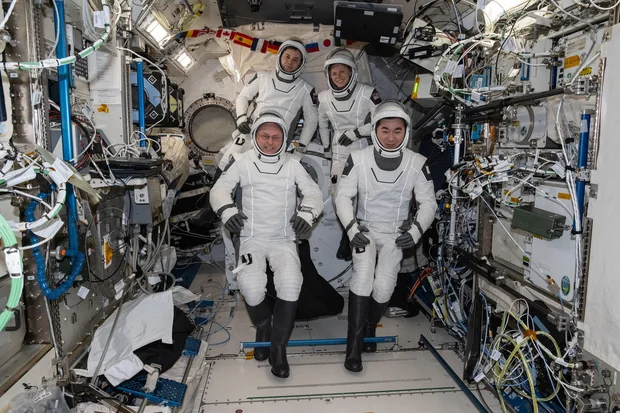
For the first time in NASA’s history, a medical crisis has forced the premature end of an International Space Station (ISS) crew rotation. The SpaceX Crew-11 emergency return 2026 concluded successfully early Thursday morning when four astronauts splashed down in the Pacific Ocean.
NASA originally scheduled the mission to continue for several more weeks. However, a “serious medical condition” affecting one crew member necessitated an immediate departure. This marks a significant shift in orbital operations, prioritizing health over schedule.
Pacific Splashdown for Dragon Endeavour
The spacecraft, dubbed Endeavour, sliced through the atmosphere in a high-stakes descent. Heat shields withstood friction temperatures reaching 3,500 degrees Fahrenheit.
After a ten-and-a-half-hour journey, the capsule’s parachutes deployed without issue. The vessel slowed to a gentle 15 miles per hour before hitting the water near San Diego at 12:45 a.m. PST.
Recovery teams moved quickly to retrieve the astronauts. In a serene contrast to the fiery re-entry, live feeds captured dolphins swimming near the bobbing capsule moments after impact.
Details on the SpaceX Crew-11 Emergency Return 2026
NASA officials finalized the decision to abort the mission on January 8. This followed the cancellation of a planned spacewalk on January 7, when the health concern first disrupted operations.
Agencies are maintaining strict confidentiality regarding the affected astronaut’s identity. Authorities did confirm, however, that spaceflight operations did not cause the condition.
Despite the abrupt end, the crew completed 167 days in orbit. The returning team includes:
- Zena Cardman: Mission Commander and NASA geobiologist.
- Mike Fincke: A retired Air Force colonel and veteran astronaut.
- Kimiya Yui: Representative from the Japan Aerospace Exploration Agency (JAXA).
- Oleg Platonov: Roscosmos cosmonaut.
All four appeared in good spirits upon exit. They gave thumbs-up signals before medical teams assisted them onto gurneys—a standard precaution after months of microgravity exposure. Staff then transported them to a hospital for evaluation.
Station Operations Continue
The ISS remains active. NASA astronaut Christopher Williams stays on board alongside two Russian colleagues.
Looking ahead, space agencies are preparing for the next phase. Crew-12 launches in mid-February, aiming to resume the scientific research that the emergency briefly interrupted.
____________________________________________________










 Armenian Dram
 Ghana Cedi
 Gambian Dalasi
 Guinea Franc
 Nigerian Naira
 CFA Franc BEAC