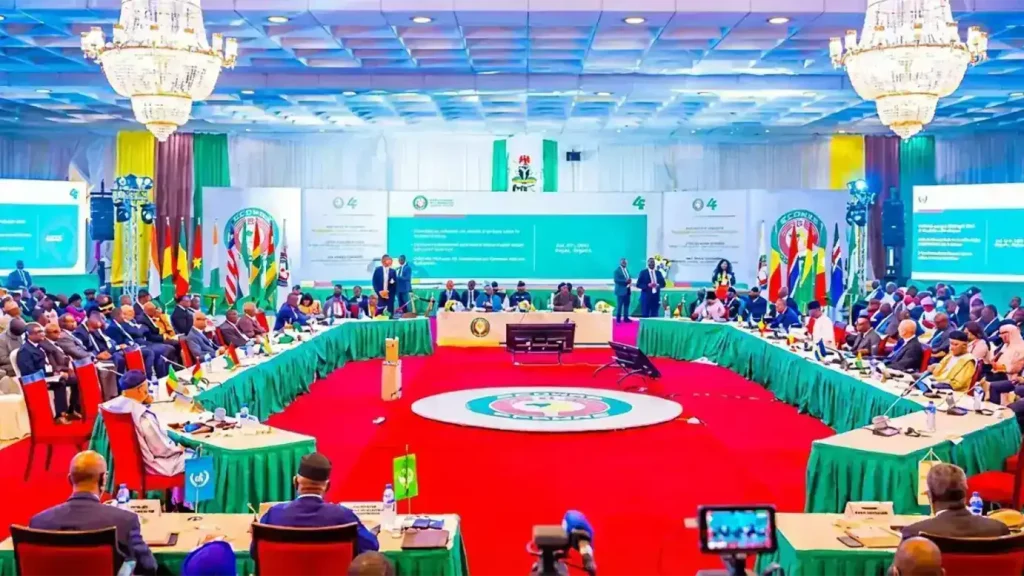
West African leaders, policymakers, and development partners have launched high-level consultations aimed at accelerating water security and sustainable sanitation reforms across the region under the Africa Water Vision 2063 framework.
The talks, held in Abuja, mark the start of work on the first implementation plan for the continental strategy, focusing on translating long-term goals into measurable outcomes between 2026 and 2033.
Speaking at the opening of the sub-regional ministerial and Technical Advisory Committee meeting, Chair of the committee, Babarinde S. Mohammed, described the engagement as a turning point for Africa’s water sector.
“This is not a routine engagement—it is a call to action,” he said, urging stakeholders to adopt a pragmatic and results-driven roadmap capable of delivering tangible impact.
The consultation, convened by the African Ministers’ Council on Water in partnership with the Federal Government of Nigeria, follows the adoption of the Africa Water Vision 2063 at an African Union summit in Addis Ababa.
Nigeria’s Minister of Water Resources and Sanitation, Joseph Terlumun Utsev, described the meeting as “timely and strategic,” warning that rapid urbanisation, climate variability, and rising demand are placing unprecedented pressure on water systems across the continent.
“While progress has been made, it has not been uniform or sufficient,” he said, pointing to persistent gaps in access to safe water and sanitation.
Utsev outlined key priorities for the next phase, including harmonised policies, increased investment, and stronger accountability frameworks. He also highlighted Nigeria’s ongoing initiatives such as SURWASH, PEWASH, and the Clean Nigeria campaign aimed at ending open defecation.
In a goodwill message, Nyambe Nyambe of the African Union Commission stressed the need for deeper collaboration, describing water as a critical resource for economic transformation and improved livelihoods.
Participants at the meeting emphasised the importance of a unified West African position in shaping the implementation plan, ensuring regional priorities are fully reflected in the broader continental agenda under Agenda 2063.
Outcomes from the Abuja consultation are expected to influence policy direction, financing strategies, and investment flows in Africa’s water sector over the next decade.
Stakeholders expressed cautious optimism that stronger political commitment, coordinated action, and sustained funding could unlock the region’s water potential and drive long-term socio-economic development.









 Armenian Dram
 Ghana Cedi
 Gambian Dalasi
 Guinea Franc
 Nigerian Naira
 CFA Franc BEAC